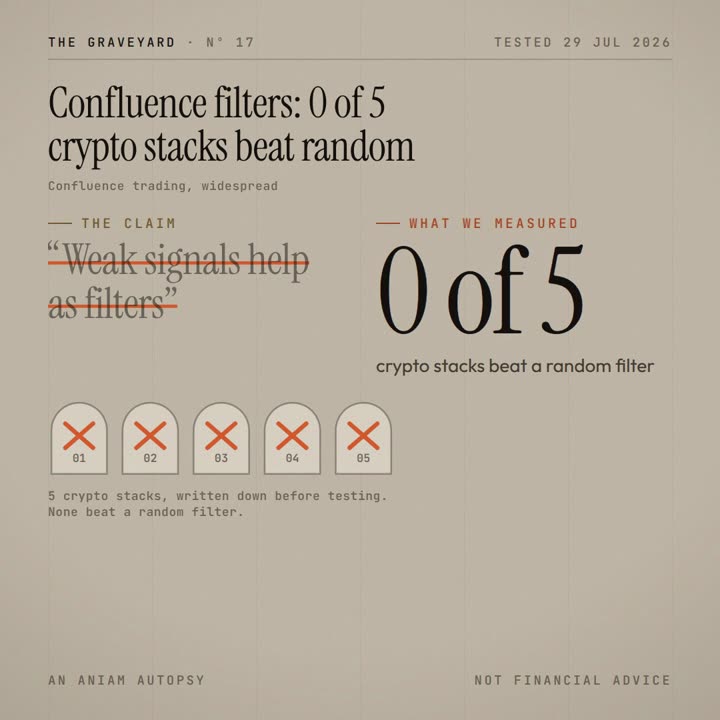
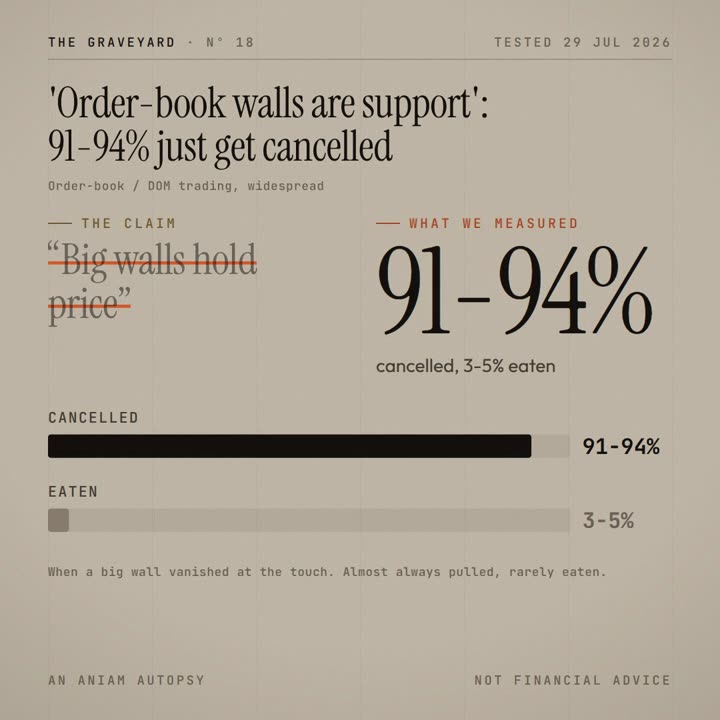
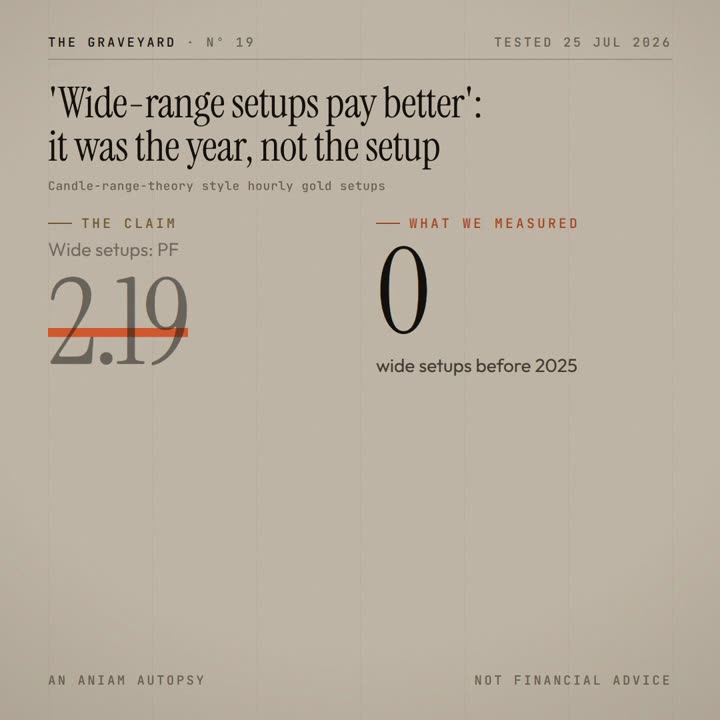
Nº 16 · 3 Sep 2026
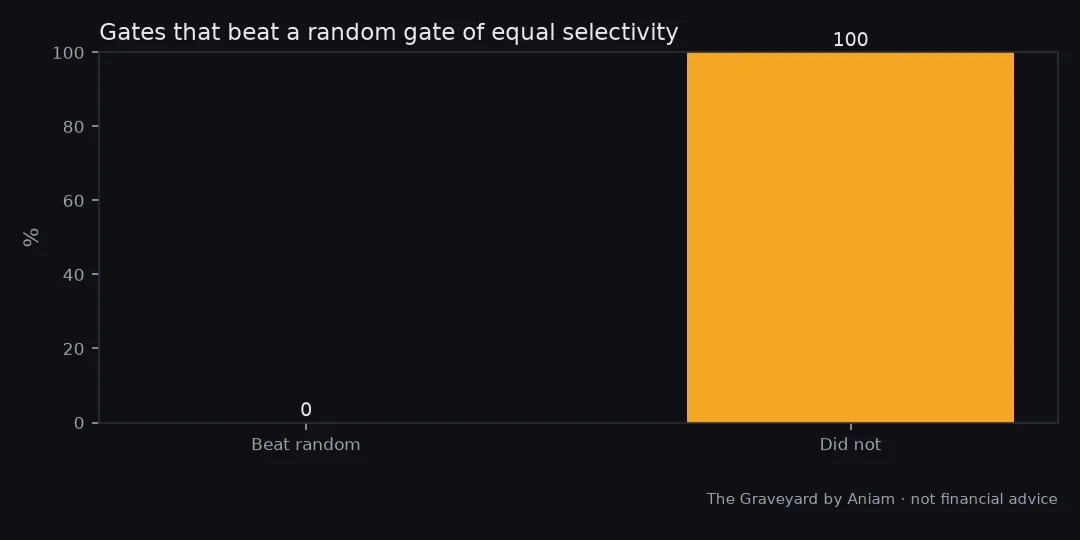
A regime gate on a losing strategy: 0 of 7 beat a random gate
- Trades
- 609
- Baseline profit factor
- 0.97
- Windows the best gate won
- 1 of 4
Trading less helped no matter how the trades were chosen.
Read the autopsyclaim · method · every number · the raw chart
Source: Volatility regime filters, widespread
Skipping trades at random helped just as much.
That is what a strategy with zero expectancy looks like.
This verdict is about the strategy as published, not about the person who shared it.
The claim
Here’s what the strategy promises, in its own terms.
Add a volatility regime filter and the strategy stops losing.
How we tested it
Same six checks as everything else here: random entries, coin flips, a look-ahead audit, unseen years, double costs and a luck check. How we test →
What we found
609 trades over three years of gold data. The baseline fade strategy was profit factor 0.97. Seven gates (ATR expansion, efficiency ratio, combined) were tested against a random gate that skipped trades at the same rate. None beat the random gate; the random gate's median was usually better. Trading less helped no matter how you chose, which is the signature of a strategy with zero expectancy. One gate won in 2026 alone and failed on the full sample, the last four months and the drawdown month. Method note: Control design matters: a gate that skips a trade leaves you flat for later signals, so the honest control is a random gate with matched skip rate, not matched trade count.
The numbers
The headline numbers from our test.
| Trades | 609 |
|---|---|
| Baseline PF | 0.97 |
| Gates | 7 |
| Gates beating random | 0 |
| Windows where best gate won | 1 of 4 |
- Profit factor: money won divided by money lost. Below 1.0 loses money. Around 1.0 is break-even.
- R-multiple: profit or loss measured in units of the amount risked per trade. +1R means you made what you risked.
- vs random: how the strategy did against the same trades with random entries.
Control design matters: a gate that skips a trade leaves you flat for later signals, so the honest control is a random gate with matched skip rate, not matched trade count.
You’re on the list.
Your first issue arrives with the next weekly send. Until then, the graveyard is open.