Nº 08 · 12 Oct 2026
Buying under the biggest liquidation: no better than random
- Variants tested
- 12
- Profit factor range
- 0.30-0.96
- Random control profit factor
- 0.85
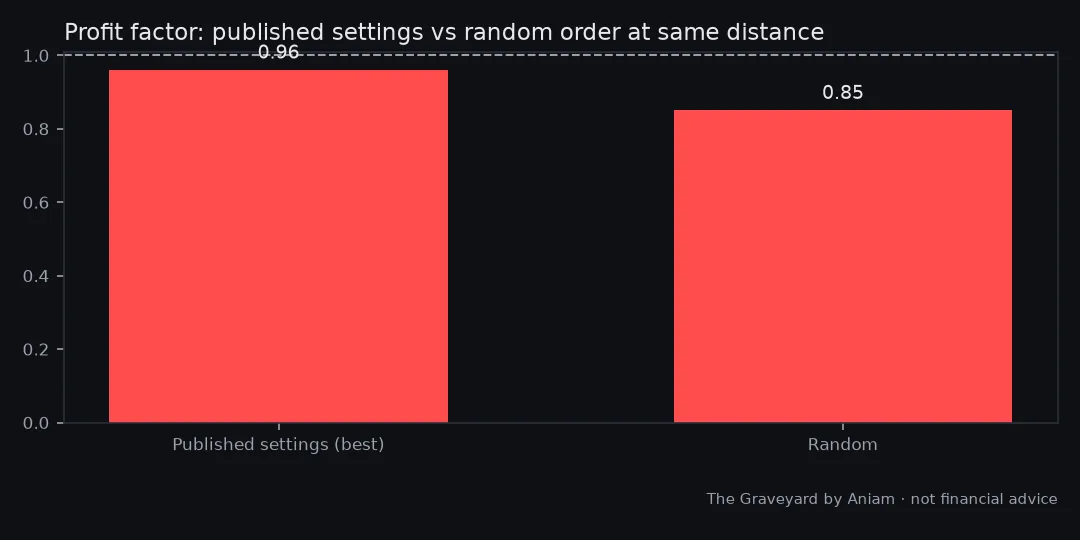
All 12 variants lost money, and the exact published settings did about as well as random orders.
Read the autopsyclaim · method · every number · the raw chart
Source: YouTube crypto-bot channel
Price rarely reaches the big piles, so they fill 4x less often.
The only evidence in the video was a single winning trade.
- Beat random
- 74-81% (bar: 90%)
This verdict is about the strategy as published, not about the person who shared it.
The claim
Here’s what the strategy promises, in its own terms.
Place a limit buy just under the biggest liquidation level, take profit 6%, stop 4%, with a trailing stop.
How we tested it
Same six checks as everything else here: random entries, coin flips, a look-ahead audit, unseen years, double costs and a luck check. How we test →
What we found
Tested on 48,000 coin-scans across BTC, ETH, SOL and XRP over 76 days, with real fees and a 200-draw random control at the same distance. All 12 variants had profit factor 0.30-0.96. The exact published settings scored 0.85-0.96 against a random control of 0.85. Big liquidation piles get filled about four times less often than random orders at the same distance, because price rarely reaches them. The only evidence in the video was a single winning trade.
The numbers
The headline numbers from our test.
| Variants | 12 |
|---|---|
| PF range | 0.30-0.96 |
| Exact settings PF | 0.85-0.96 |
| Random control PF | 0.85 |
| Fills vs random | 4x fewer |
| Beats random | 74-81 (bar 90) |
- Profit factor: money won divided by money lost. Below 1.0 loses money. Around 1.0 is break-even.
- R-multiple: profit or loss measured in units of the amount risked per trade. +1R means you made what you risked.
- vs random: how the strategy did against the same trades with random entries.
You’re on the list.
Your first issue arrives with the next weekly send. Until then, the graveyard is open.